 Skip to main content


Vision problems aren’t always easy to spot, especially in young children. Some conditions develop gradually and may not cause obvious symptoms, making routine eye exams an important part of supporting healthy vision from an early age.
One common condition is amblyopia, also known as lazy eye. It develops when one eye doesn’t communicate with the brain as well as the other, causing the brain to rely more heavily on the stronger eye. Over time, this can affect healthy vision development if left untreated.
The good news is that amblyopia can often be treated successfully, especially when it’s detected early. That’s why routine eye exams are an important part of protecting your child’s vision as they grow.
In this guide, we’ll explain what causes lazy eye, the signs parents should watch for, available treatment options, and when it’s time to schedule an eye exam.
What Is Lazy Eye (Amblyopia)?
Lazy eye, or amblyopia, is a vision condition that occurs when the brain favors one eye over the other. Even if both eyes appear healthy, the brain may begin ignoring signals from the weaker eye, causing vision in that eye to develop differently.
A problem with the eye muscles themselves doesn’t cause this. Instead, it’s a condition involving how the brain and eyes work together during early childhood, when vision is still developing.
Amblyopia is one of the most common causes of decreased vision in children, affecting an estimated 2% to 4% of kids. Because it often develops at a young age and may not cause noticeable symptoms, regular comprehensive eye exams play an important role in early detection.
When identified and treated early, many children experience significant improvements in vision and can continue developing healthy eyesight as they grow.
Types of Lazy Eye
Not all cases of amblyopia develop for the same reason. In fact, there are three main types of lazy eye, each caused by a different issue affecting how the brain and eyes work together.
Understanding the different types can help explain why treatment varies from child to child and why early diagnosis is so important.
Strabismic Amblyopia
Strabismic amblyopia is the most recognizable type of lazy eye because it’s caused by eye misalignment, also known as strabismus. One eye may turn inward, outward, upward, or downward instead of pointing in the same direction as the other.
When the eyes aren’t aligned, the brain receives two different images. To avoid double vision, it begins ignoring the image from the misaligned eye and relies on the stronger eye instead. Over time, the weaker eye doesn’t develop normal vision, resulting in amblyopia.
While some children have a constant eye turn, others may only experience it occasionally, making it easier to overlook.
Refractive Amblyopia
Refractive amblyopia occurs when there’s a significant difference in prescription between the two eyes. One eye may be much more nearsighted, farsighted, or have more astigmatism than the other.
Because the brain naturally prefers the clearer image, it relies on the stronger eye while the weaker eye receives less visual stimulation. Over time, this can interfere with normal vision development.
Unlike strabismic amblyopia, the eyes often appear perfectly straight and healthy, making refractive amblyopia one of the hardest types to detect without a comprehensive eye exam.
Deprivation Amblyopia
Deprivation amblyopia is the least common form of lazy eye, but it’s also the most serious. It happens when something physically blocks light from reaching one eye during early development.
This may be caused by:
- A congenital cataract
- A severely drooping eyelid (ptosis)
- Another condition that prevents clear vision
Because the brain isn’t receiving a clear image from the affected eye, normal visual development can’t occur. Deprivation amblyopia requires prompt diagnosis and treatment to give the best chance of improving vision.
What Causes Lazy Eye in Children?
Lazy eye develops when something interferes with normal vision in one eye during early childhood, a time when the brain is rapidly learning how to process visual information. If one eye consistently sends a weaker or blurrier image, the brain begins favoring the stronger eye instead.
Over time, this preference can cause the weaker eye to fall behind in development.
The most common causes of amblyopia include:
- Misaligned eyes (strabismus): When the eyes don’t work together, the brain may suppress the image from one eye to avoid double vision.
- Unequal refractive errors: If one eye is significantly more nearsighted, farsighted, or has more astigmatism than the other, the brain naturally relies on the clearer image.
- Vision blockage (deprivation): Conditions such as congenital cataracts or a drooping eyelid can prevent one eye from developing normally.
Are Lazy Eyes Genetic?
Yes, genetics can play an important role in the development of amblyopia. Children with a family history of lazy eye, strabismus, or significant refractive errors may have a higher risk of developing the condition themselves.
Other factors that may increase the risk include:
- Premature birth
- Low birth weight
- Developmental delays
- Certain genetic conditions, including Down syndrome
If your family has a history of vision conditions or your child has any of these risk factors, regular pediatric eye exams can help identify potential concerns early, often before noticeable symptoms appear.
Signs of a Lazy Eye in Children
One of the biggest challenges with amblyopia is that it can be difficult to recognize at home. Because the stronger eye does most of the work, many children don’t realize anything is wrong and may not complain about their vision.
While these signs don’t always mean a child has lazy eye, they’re worth discussing with an eye doctor. A comprehensive eye exam is the only way to accurately diagnose amblyopia.
Squinting or Closing One Eye
If your child frequently squints or closes one eye, especially in bright sunlight or while focusing on something in the distance, it could be a sign that one eye isn’t seeing as clearly as the other.
This is the brain’s way of trying to create a clearer image by relying on the stronger eye.
Head Tilting or Turning
Some children naturally tilt or turn their heads when reading, watching TV, or looking at objects up close. While this may seem like a harmless habit, it can sometimes indicate they’re trying to position their stronger eye for a better view.
Wandering or Crossed Eye
A wandering or crossed eye is one of the more noticeable signs of strabismic amblyopia. One eye may drift inward, outward, upward, or downward instead of moving together with the other eye.
The eye turn isn’t always constant. It may come and go, making it easy to dismiss as something temporary. Even occasional eye misalignment should be evaluated by an eye doctor.
Poor Depth Perception
When both eyes work together properly, they help the brain judge distance and depth. If one eye isn’t contributing equally, children may have trouble with activities that require depth perception.
You might notice your child:
- Frequently bumping into objects
- Having difficulty catching or throwing a ball
- Struggling with sports or playground activities
- Misjudging steps or curbs
While these behaviors can have many causes, vision should always be considered as a possible factor.
Difficulty with Close-Up Tasks
Children with amblyopia may have a harder time with activities that require sustained focus.
Watch for signs such as:
- Holding books or tablets very close to their face
- Losing their place while reading
- Avoiding puzzles or coloring
- Complaining that their eyes feel tired during homework
Because these changes often happen gradually, they can easily go unnoticed without regular eye exams.
Eye Rubbing or Fatigue
If your child frequently rubs their eyes after reading, using a tablet, or doing schoolwork, it may be a sign that their eyes are working harder than they should.
Vision problems like amblyopia can lead to eye strain, especially during activities that require prolonged focus. While occasional eye rubbing is normal, frequent fatigue or discomfort is worth discussing with your eye doctor.
Lazy Eye in Infants, Babies, and Toddlers
Detecting lazy eye in babies and toddlers can be especially challenging because young children can’t tell you when something doesn’t look right. They also aren’t old enough to complete traditional vision tests, making routine pediatric eye exams even more important.
Parents can still watch for a few early signs, including:
- One eye that consistently drifts or wanders
- Eyes that don’t appear to move together
- Difficulty tracking faces or toys
- A head tilt that becomes a regular habit
Keep in mind that occasional eye crossing is common during the first few weeks of life as a baby’s visual system develops. However, persistent eye misalignment deserves further evaluation.
Will Lazy Eye in Infants Go Away?
It’s normal for newborns to have occasional eye misalignment during their first few weeks of life. As the eye muscles strengthen and the visual system matures, this often improves on its own.
However, if one eye continues to drift or doesn’t appear to work together with the other after about 3 to 4 months of age, it’s important to schedule a full eye exam.
While temporary newborn eye crossing may resolve naturally, amblyopia itself does not go away without treatment. As time passes, the brain becomes more accustomed to relying on the stronger eye, making the condition more difficult to treat later in childhood.
What Happens If Amblyopia Goes Untreated?
Amblyopia doesn’t typically improve on its own. Without treatment, the brain continues relying on the stronger eye while gradually ignoring the weaker one. Over time, this can lead to permanent vision loss in the affected eye.
Beyond reduced vision, untreated amblyopia can affect several aspects of everyday life, including:
- Poor depth perception
- Difficulty with sports and physical activities
- Challenges with hand-eye coordination
- Trouble with reading or other close-up tasks
Some research also suggests that undiagnosed vision problems, including amblyopia, may contribute to difficulties in the classroom. Children who struggle to see clearly can sometimes appear inattentive or have trouble keeping up with schoolwork, even though the underlying issue is vision rather than learning ability.
The earlier amblyopia is diagnosed, the better the chances of improving vision and preventing long-term complications.
At What Age Should Amblyopia Be Treated?
When it comes to treating lazy eye, earlier is always better. During the first several years of life, a child’s visual system is still developing. This gives the brain a greater ability to strengthen the connection with the weaker eye through treatment.
Treatment is generally most effective before age 7. However, many children older than 7 can still benefit, depending on the severity of the condition and the treatment plan recommended by their eye doctor.
As children get older, the brain becomes less adaptable, making it more difficult to improve vision in the weaker eye. That’s why routine eye exams are so important, even if your child hasn’t mentioned any vision concerns.
How Is Lazy Eye Diagnosed?
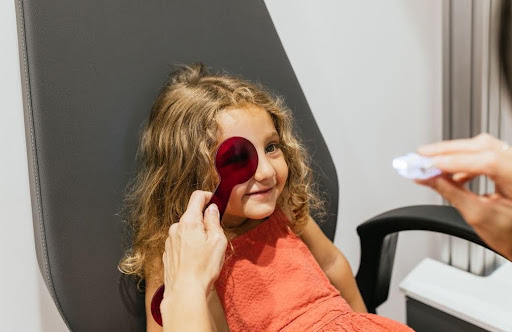
Diagnosing amblyopia is typically straightforward during a comprehensive eye exam. Because many children with lazy eye don’t have obvious symptoms, these exams are the best way to identify the condition before it affects long-term vision.
Your child’s eye doctor may evaluate:
- Visual acuity (how clearly each eye sees)
- Eye alignment and tracking
- Refractive errors such as nearsightedness, farsightedness, or astigmatism
- How well both eyes work together as a team
Some offices also use photoscreening, a technology that helps identify children who may be at risk for vision problems before they are old enough to participate in a traditional eye exam. While photoscreening is a valuable tool, it doesn’t replace a comprehensive eye exam.
When Should Children Have Their Eyes Examined?
The American Optometric Association recommends comprehensive eye exams at key stages of childhood development, including:
- Around 6 months of age
- Around age 3
- Before starting school
- Every year after that, or as recommended by your child’s eye doctor
If you notice any signs of lazy eye or have a family history of vision conditions, don’t wait for the next scheduled exam.
Corrective Eyeglasses or Contact Lenses
For many children, the first step is simply correcting the underlying vision problem with prescription glasses or contact lenses.
If amblyopia is caused by a significant difference in prescription between the eyes, wearing the correct prescription can sometimes be enough to strengthen the weaker eye over time. Your child’s eye doctor will monitor progress during follow-up visits to determine whether additional treatment is needed.
Eye Patching
Eye patching is one of the most common treatments for lazy eye. A patch is placed over the stronger eye for a prescribed number of hours each day. This encourages the brain to rely on the weaker eye, helping improve vision over time.
It’s normal for children to resist wearing an eye patch at first, especially because it temporarily makes activities more challenging. Parents can help by incorporating fun close-up activities during patching time, such as:
- Coloring
- Reading
- Building with blocks
- Completing puzzles
- Drawing or crafts
Consistency is one of the biggest factors in successful treatment.
Atropine Eye Drops
For some children, atropine eye drops may be recommended instead of a patch. These drops temporarily blur the stronger eye’s close-up vision, encouraging the brain to use the weaker eye without requiring a physical patch.
Because every child is different, your eye doctor will recommend the treatment approach that’s most appropriate for your child’s needs.
Surgery
If amblyopia is caused by strabismus, surgery may be recommended to improve eye alignment. While surgery can help straighten the eyes, it doesn’t treat the amblyopia itself. Additional treatments, such as glasses, patching, or atropine drops, are often still needed to strengthen the weaker eye and improve communication between the brain and the eyes.
Schedule an Eye Exam
At our locations, our team is committed to helping children build healthy vision from an early age through comprehensive eye exams and personalized care. If it’s time for your child’s next eye exam or you have concerns about their vision, find a location near you and schedule an appointment today.